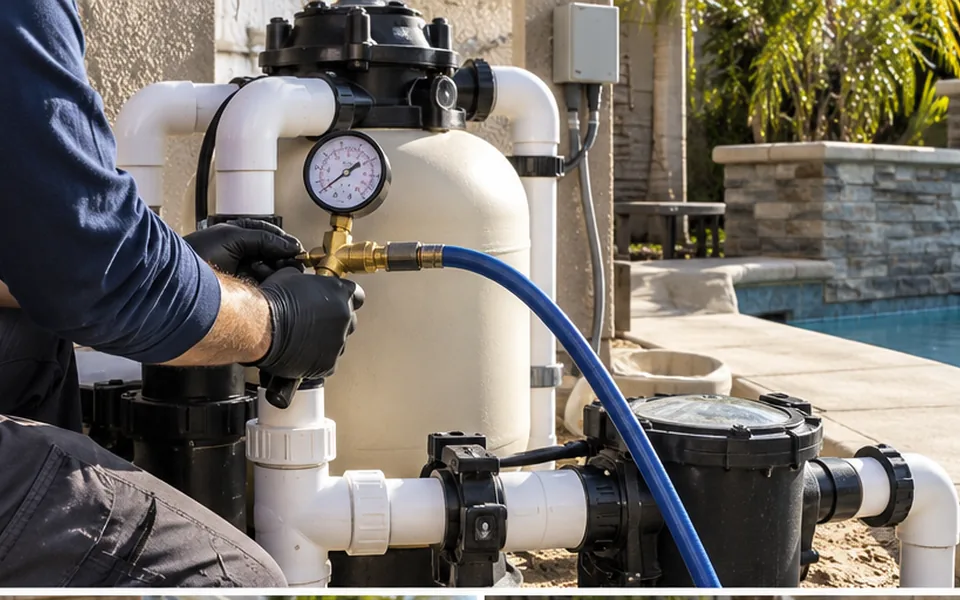
Pool leak detection Newark CA owners can book when the water level drops, the autofill runs all day or a deck cracks near the equipment. We test the shell, fittings and buried lines before anyone drains a thing. Call (510) 229-3322.
NEWARK CA 94560 & TRI-CITY DISPATCHACOUSTIC • THERMAL • PRESSURE
Pool Leak Detection Newark CA With Real Answers
Pool leak detection in Newark, CA checks whether your pool is leaking or just evaporating, then pinpoints the leak. We bucket test, pressure test every plumbing line, dye test the skimmer, lights and fittings and listen with a hydrophone, so you fix one spot instead of guessing. Call (510) 229-3322.
This page is for owners of in ground pools and attached spas who are adding water too often. It also helps property managers who need a written report before approving repairs.
Pools lose water for plain reasons and for costly ones. Telling them apart takes a few simple tests, and those tests save you from paying for a repair you do not need. We start with the cheapest check and work toward the deepest one.
What Pool Leak Detection Includes
Each step rules out one part of the system.
Bucket Test
We run a bucket test to compare the pool's loss with evaporation, which separates a real leak from normal summer loss.
Equipment Pad Check
The pump, filter, valves and heater are inspected for drips, wet soil and air in the system.
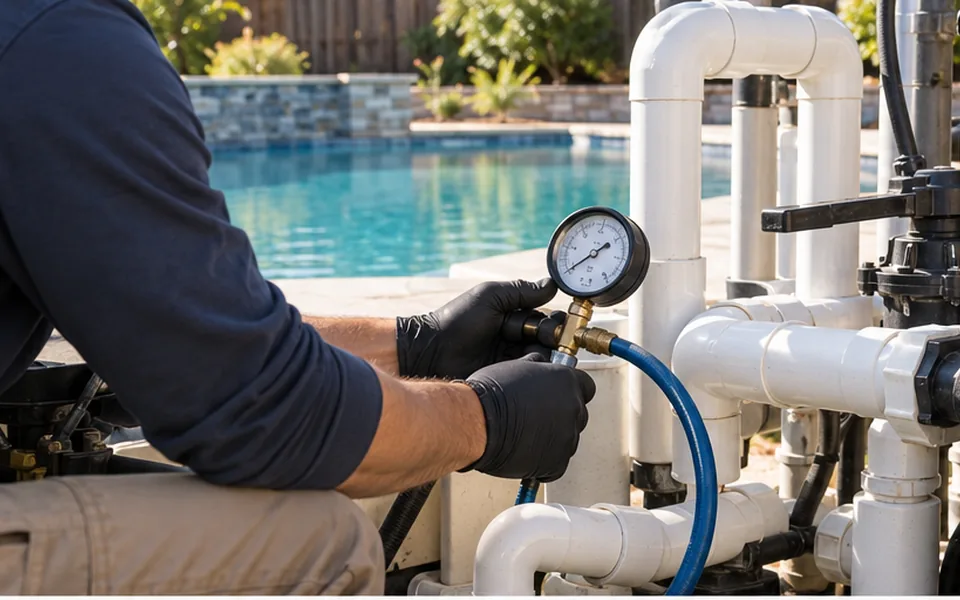
Pressure Tests on Plumbing Lines
The skimmer, main drain and return lines are plugged and tested one at a time. A line that will not hold pressure is the suspect.
Dye Test of the Shell and Fittings
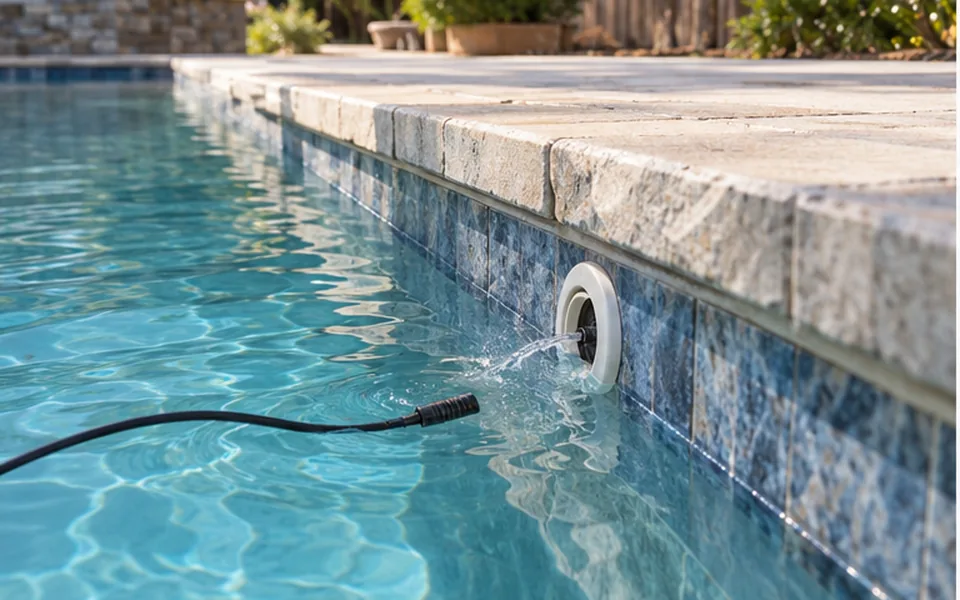
A small amount of dye near cracks, lights and fittings shows where water is being pulled out of the pool.
Hydrophone Listening
For lines under the deck, a hydrophone and ground microphones listen along the route to mark the leak.
Your Pool Leak Report
You receive the test results, photos and repair options in plain words, so you can compare quotes with real data.
Why Pools Leak in the Tri City Area
Many Tri City pools were built in the 1960s to 1980s with older plumbing. Expansive clay moves decks and buried lines, which cracks skimmers and fittings. Summer evaporation around a quarter inch a day can hide a real leak.
Clay that shifts: Expansive Bay mud moves with the seasons and pulls on buried PVC.
Older pipe and fittings: Original plumbing has had decades of pressure cycles.
Larger lots:Mission San Jose and larger Newark lots often hold pools with long plumbing runs.
Hot, dry months: Heat and wind increase evaporation, which can mask a leak.
Pool pumps and heaters: Equipment connections vibrate and loosen over many seasons, so drips at the pad are common.
The Bay Area's mild climate lets pools run most of the year, which means more run time on pumps, more water added by autofills and more chances for a small loss to go unnoticed. A steady record of what you add each week is the best clue you can bring to the call.
Five Steps to Find a Pool Leak
Call and describe the problem: Tell us how fast the level drops and whether the autofill runs. We give a price range and explain how to do a bucket test before we arrive.
Inspect and test the property: We check the equipment pad and bucket test the pool, then pressure test each plumbing line.
Pinpoint the exact spot: Dye tests cover the shell, lights and fittings, and a hydrophone follows buried lines. The leak is marked.
Review the report and quote: You get the findings, photos and repair choices, with a firm price before any work starts.
Watch for these clues around the pool and the pad.
Water level dropping fast: Losing more than a quarter inch a day is a warning sign.
Pool autofill running constantly: A pool autofill running constantly hides a leak by refilling the loss.
Cracks in the deck: Shifting clay can crack concrete over buried lines.
Wet spots near the equipment: Soggy soil around the pad points to a leaking pipe or valve.
Air in the pump basket: Air in the system can mean a suction side leak.
Loose or missing tile: Water behind the tile line can release the grout.
Is It a Leak or Just Evaporation?
A pool leak or evaporation question has a simple answer, and you can run the first test yourself.
1. Fill a bucket with pool water and set it on the top step.
2. Mark the water level inside the bucket and on the pool wall.
3. Leave both for a day with the pump off and no one swimming.
4. Compare the marks. If the pool dropped more than the bucket, you have a leak.
Normal summer loss is around a quarter inch a day. A bucket test pool leak result that shows more points to a leak somewhere. Call us with your numbers and we will plan the next tests.
Repeat the test with the pump running if the first result is close. If the pool loses more water with the pump on, the leak is likely on the pressure side of the plumbing. If it loses more with the pump off, think suction side, skimmer or shell.
Pool and Spa Leaks We Locate
Pools leak in many places, and each place needs its own test.
Skimmer Leaks
The skimmer body can pull away from the deck, so we dye test the seams and run a line test. A pool skimmer leak is among the most common sources.
Light Niche Leaks
A pool light leak can start at the gasket, the conduit or the niche. Dye shows whether water is escaping there.
Return and Main Drain Lines
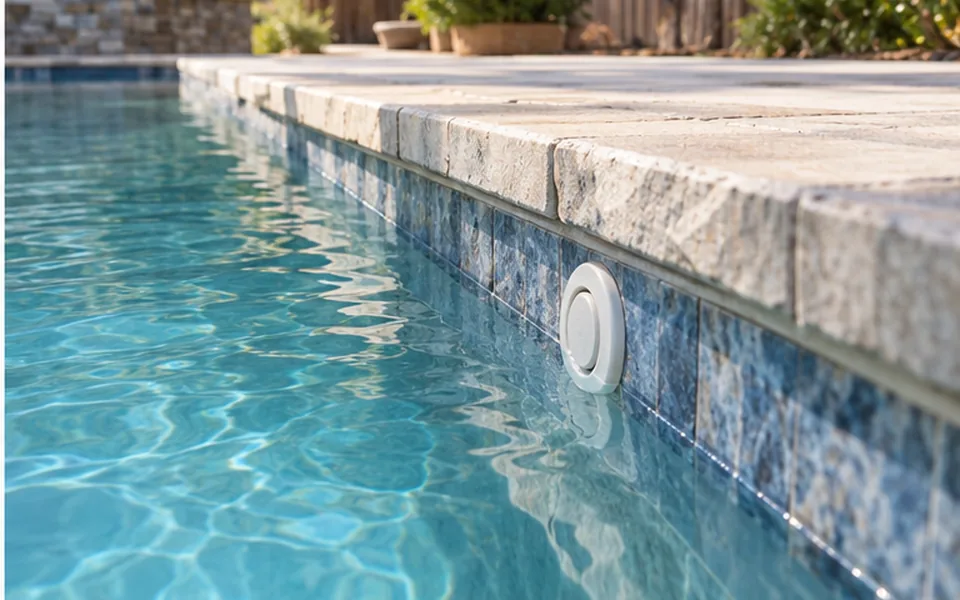
Buried lines crack where clay moves the deck. We plug each one and test it for pressure loss.
Shell and Tile Line Cracks
A crack in the plaster or the tile line can lose water slowly. Dye placed near the crack shows if it is pulling water.
Spas, Fountains and Water Features
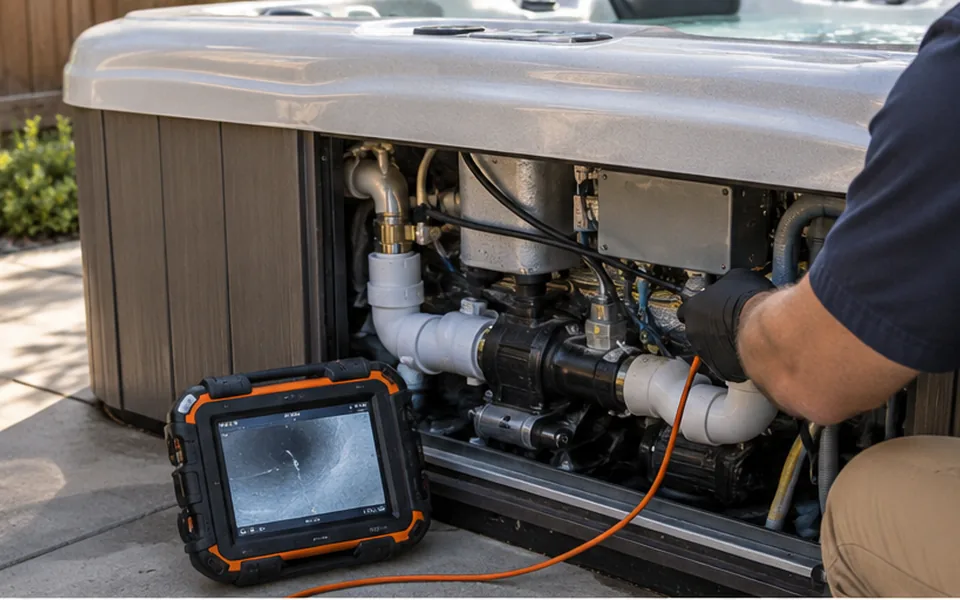
Attached spas and decorative features share the same plumbing, so we test them as part of the visit. Spa and hot tub work is covered in more detail by our spa team.
Equipment Pad Leaks
Pumps, filters, heaters and valves leak at unions and gaskets. A wet pad can look like a pool leak, so we separate the two before suggesting repairs.
How Much Does Pool Leak Detection Cost in Newark?
Pool leak detection usually costs more than a basic home check because there are more lines to test. We set a range by phone once we know the pool size, the number of lines and whether a spa is attached. Pool leak detection cost Newark owners pay depends on those details, and spa add ons are priced separately. Search for pool leak detection cost and you will find a wide spread, so we explain the number before the visit.
What Affects the Price
How It Changes the Number
Pool size and type
Larger pools have more shell and more lines
Number of plumbing lines
Each line is plugged and tested
Attached spa
Adds lines and fittings to test
Deck access
Concrete or pavers slow the listening step
Pool Repair Paths After the Leak Is Marked
Fixes range from a small sealing job to a line repair under the deck.
Putty or sealant on a fitting: A quick fix for a skimmer seam or light niche.
Fitting replacement: A worn return or drain fitting is swapped.
Line repair under the deck: A small cut in the deck gives access to the pipe, and the line is repaired.
Line reroute: A badly damaged line can be rerun to avoid cutting more concrete.
Pool Leaks Found Around Newark
Recent pool jobs show the dye test, the marked deck and the finished repair.
Before • Non-Invasive Pinpoint Mark
Step 1: Surface Tracing & Pinpoint Marking (Pool Leak Detection in Newark, CA)
Isolated line pressure testing, acoustic listening, and thermal scanning mark the exact leak point before any surface is opened.
After • Verified Repair & Written Report
Step 2: Targeted Access, Pressure Retest & Clean Restoration
Confined to the marked spot with drop-cloth protection, followed by a post-repair pressure verification and photo report.
Protecting Your Pool and Yard
We take care of the pool area during the visit.
Pool left full for most testing, with no draining
Deck and landscaping protected with covers
Test plugs removed afterward
Equipment left running as we found it
Water chemistry left undisturbed
Questions answered before we go
Related Services for Pool Owners
Water Leak Detection: Covers the plumbing inside your home if the pool tests dry.
Leak Repair: Fixes the failed line or fitting once it is marked.
Owners in Milpitas and Castro Valley call us for the same pool tests, along with pool leak detection in Fremont, pool leak detection Union City requests and calls from Hayward. Pool owners across the Tri City area get the same team and the same careful steps.
Pool Leak Questions Answered
Do a bucket test. Set a bucket of pool water on a step, mark both water levels and wait a day with the pump off. If the pool drops more than the bucket, you have a leak.
In Bay Area summers a pool can lose around a quarter inch a day to evaporation, more on windy days. Losing a half inch or more a day usually points to a leak.
No. Most testing is done with the pool full, using dye, pressure tests and a hydrophone. Draining is rarely needed and can damage some pools.
The most common spots are the skimmer, light niches, return fittings and the plumbing lines under the deck. Cracks in the plaster shell are less common but do happen.
Spa leak detection Newark CA owners need when a hot tub keeps losing water or an attached spa will not hold its level. We test jets, unions, the heater and lines to find the leak. Call (510) 229 3322.
Pool plumbing pressure test Newark CA owners need when the pool loses water and the shell looks fine. We test each buried line on its own and mark the leak under the deck. Call (510) 229 3322.
Newark & Tri-City Dispatch Map — Pool Leak Detection in Newark, CA
Dispatching non-invasive leak detection technicians from 7395 Morton Ave, Newark, CA 94560 across Newark (94560), Fremont, Union City, Hayward, Milpitas, Menlo Park, and Castro Valley.
Stop Topping Off Your Pool Every Day
A leak you can fix once costs less than water you add every week. Call (510) 229-3322 and tell us how fast the level drops. If you searched pool leak detection near me, we serve ZIP code 94560 and the Tri City area, and a photo of the equipment pad helps us prepare for the visit.

 01
Pool & Spa Leaks