
Hot Water Slab Leak Detection Newark Homes Trust
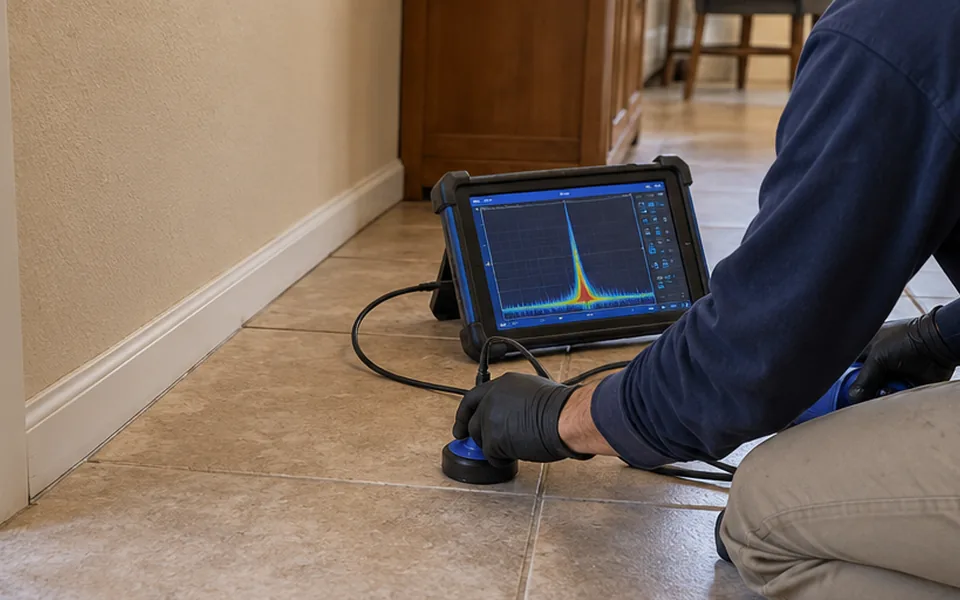
A hot water slab leak in a Newark home usually shows up as a warm spot on the floor and a water heater that runs nonstop. We isolate the hot side at the heater, pressure test it, then use thermal imaging and listening gear to mark the exact spot under your concrete. Call (510) 229-3322.
This page is for owners who feel heat through tile or carpet, hear water at night or watch both utility bills climb together.
Hot water leaks are easier to find than most, because heat leaves a trail. That trail is why this visit is often shorter than a general slab search. It also means the first sign is sometimes warm flooring that you mistake for a nice feature.
What Hot Side Testing Includes
Heat is the clue we follow, and each step confirms it.
- Heater and meter check: We look at the water heater, then read the meter with everything off. A moving dial plus a running heater is a strong first hint.
- Hot side isolation: The cold feed is closed at the heater so only the hot lines hold pressure. This tells us whether the loss is on the hot side at all.
- Pressure test: A falling gauge confirms the hot side is leaking, and the rate of the drop hints at the size of the break.
- Thermal scan: A thermal camera follows the heat trail across the floor, and we use a thermal camera hot water leak scan to outline the warm zone.
- Acoustic confirm: Ground microphones listen at the hottest point to verify the spot, so heat from a duct is not mistaken for a leak.
- Marked spot and report: You receive thermal photos and the marked location in writing, ready for your insurer or plumber.
Why Hot Lines Fail First in Older Slab Homes
Hot water lines wear faster than cold ones. Heat and hard water scale thin the copper, so the hot side often gives out first.
In many 1970s slab homes in Newark, the hot line runs under kitchens and hallways, which is why warm tile is a common first clue. The ACWD blend and expansive clay under the slab add stress year after year, and an original copper line that has served half a century is due for a close look.
Hot lines also expand and contract every time the heater cycles. Over decades that movement works on joints and thin spots, and a pinhole forms where the copper has worn the most. Water then escapes into the soil under the slab, warming it as it goes.
Five Steps to Trace a Hot Line Leak
The same five steps apply, with a thermal camera doing much of the work here.
- Call and describe the problem: Tell us which room feels warm and when you first noticed it. We give a price range and tell you how to turn the heater down while you wait.
- Inspect and test the property: Our tech checks the heater, reads the meter and closes the cold feed so the hot side can be tested on its own.
- Pinpoint the exact spot: The thermal camera finds the heat trail and the microphones confirm it. We mark the floor where both agree.
- Review the report and quote: You see the thermal images, the readings and the choices, with a firm price first.
- Repair and clean up: Our licensed California plumbing team handles the fix, restores the heater and cleans up.
Signs of a Hot Water Leak Under the Floor
Hot water leaks leave different clues than cold ones.
- Warm tile in the kitchen or hall: Heat rises through the slab above the pipe, and a warm floor tile hot water leak often starts this way.
- Carpet warm to the touch: The warmth can feel like a heated floor you did not install, and it may sit in a patch rather than a whole room.
- A pet lying on one spot: Dogs and cats seek out warm patches and settle there, so watch where they sleep.
- The heater running all day: A water heater running constantly keeps replacing water that escapes under the slab.
- A higher PG&E bill: Heating lost water adds to your gas or electric use, so a high gas bill and water bill together point to a leak.
- Hot water running out fast: Less reaches the tap because some of it is leaking away.
Hot Water Slab Leak Detection Cost in Newark
Hot side leaks are often quicker to locate because heat shows on a thermal camera, so the visit can land on the lower end of the usual range. Detection typically runs about $150 to $600 nationally (This Old House, 2026). A hot water slab leak cost Newark owners pay depends on home size and how many lines need testing.
| What Affects the Price | How It Changes the Number |
|---|---|
| Home size | Larger homes have more hot line to scan |
| One leak or several | Each confirmed spot adds time |
| Floor covering | Thick carpet or stone slows the thermal scan |
| After hours visit | Priced separately and quoted first |
People also ask about hot water slab leak repair cost, and we quote that separately after the spot is marked.
Found the Leak? Reroute or Repair
Most hot side repairs in slab homes are reroutes through the attic or walls, since hot lines tend to fail again.
- Reroute: Skips the old path under the slab and keeps your floors intact. It is the usual choice for original copper.
- Spot repair: Fits newer pipe with a single failure, since one clean break is a small fix.
- Repipe: Replaces worn lines across the home when pinholes keep appearing, and larger work like this may need a permit from the City of Newark Building Inspection Division.
Hot Water Leaks Found Near Birch Grove and Irvington
Recent hot side jobs show the thermal image, the marked floor and the finished repair. Neighbors in Birch Grove and Fremont's Irvington district book the same visit.
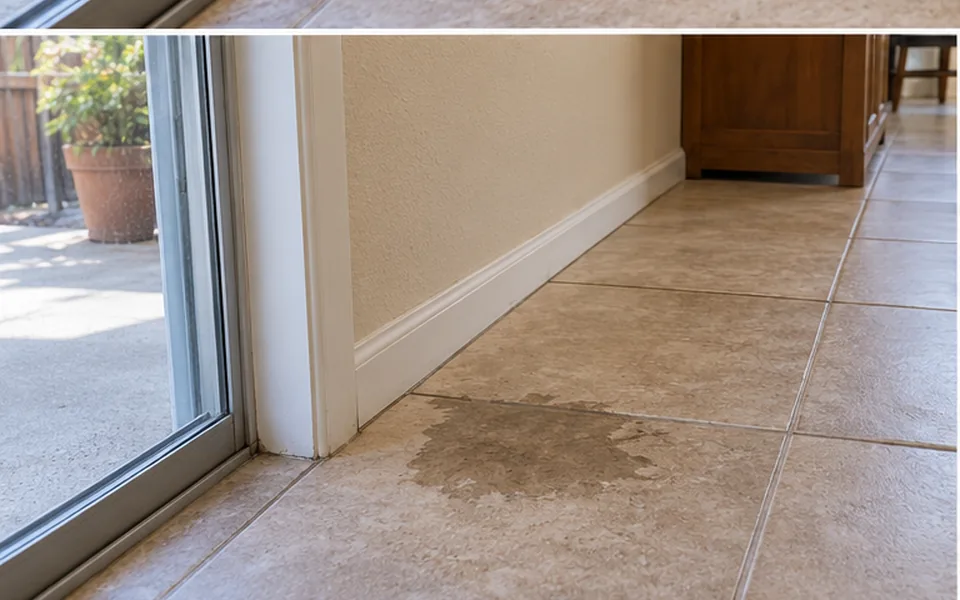 Before • Non-Invasive Pinpoint Mark
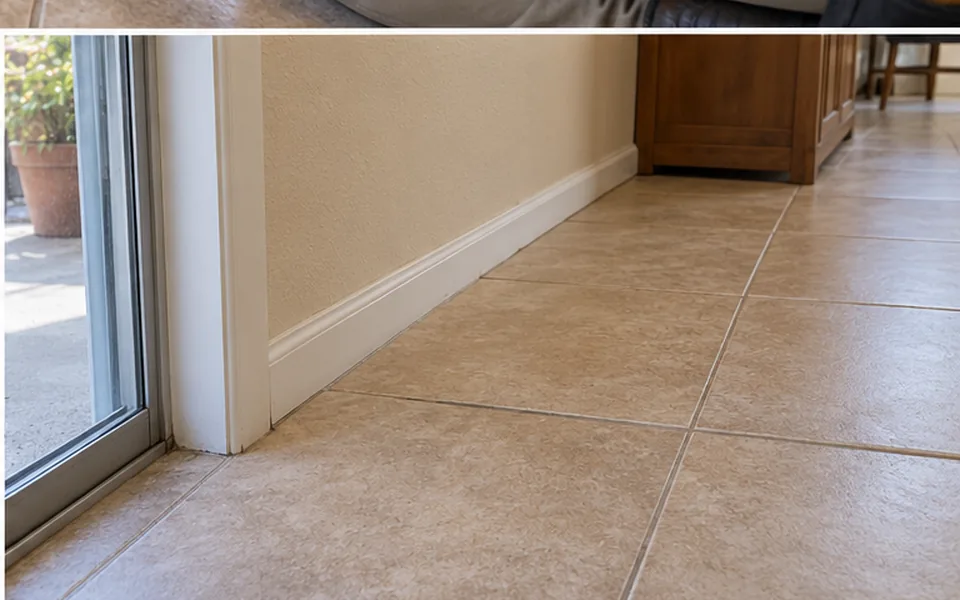 After • Verified Repair & Written Report
Keeping Everyone Safe During Testing
Hot water brings a scald risk, so the heater is handled before anything else.
- Water heater turned down or off during testing
- No scald risk to your family
- Floors covered before any work
- Heater restored to its normal setting before we leave
- Warm spots marked clearly so nobody steps on a wet patch
Related Work After a Hot Side Leak
- Thermal Imaging Leak Detection: The same camera helps with leaks in walls and ceilings.
- Pipe Rerouting: Moves hot lines out of the slab.
Hot Water Slab Leak Questions
A warm spot often means a hot water pipe under the slab is leaking and heating the concrete. It can also be a heating duct. A thermal scan and pressure test show which one it is in about an hour.
Yes. Your heater keeps reheating water that drains away under the floor, so PG&E use climbs along with your ACWD water bill. Both bills rising at once is a strong clue.
If your copper is original and more than 40 years old, a reroute is often the better choice because another leak may follow. A single spot repair can make sense on newer pipe. We explain both before any work.
Newark & Tri-City Dispatch Map — Hot Water Slab Leak Detection in Newark
Dispatching non-invasive leak detection technicians from 7395 Morton Ave, Newark, CA 94560 across Newark (94560), Fremont, Union City, Hayward, Milpitas, Menlo Park, and Castro Valley.